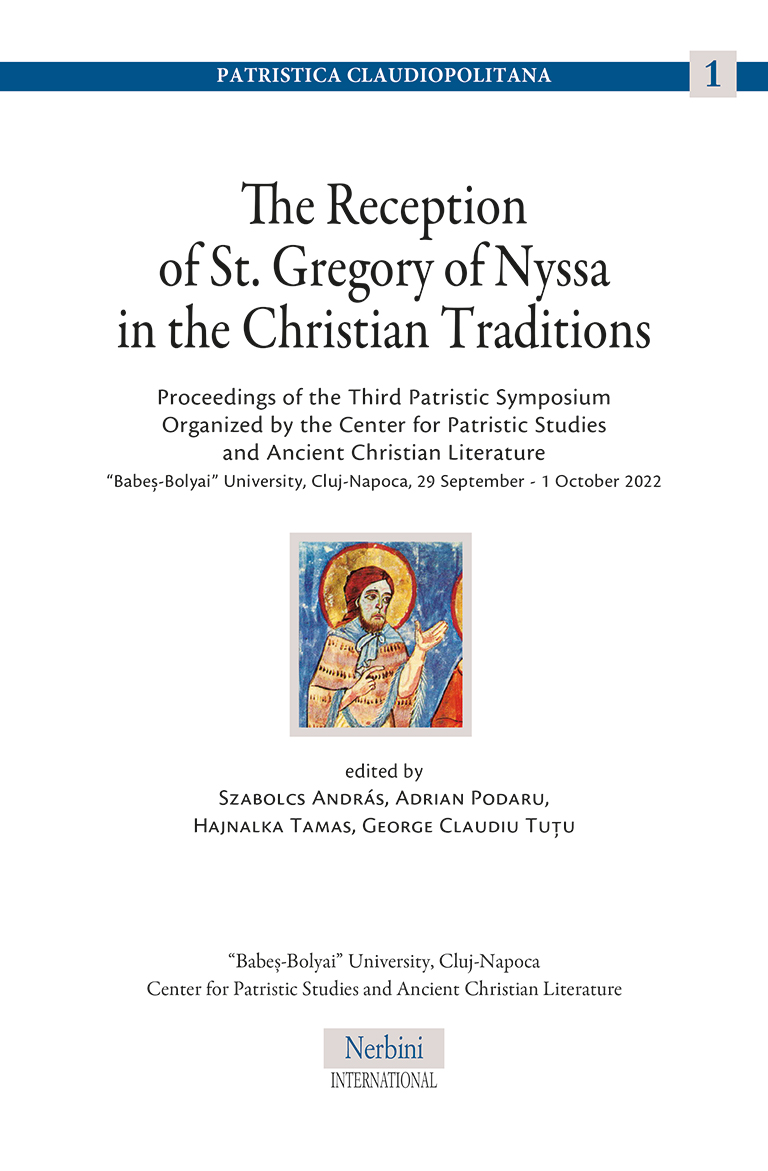
The Reception of St. Gregory of Nyssa in the Christian Traditions
Contents
Download the summaryThis volume offers a comprehensive overview of the legacy of Gregory of Nyssa (c. 335–c. 395), whose theological vision has shaped Christian thought across centuries and traditions. Bringing together selected contributions from the Third Patristic Symposium hosted by Babes-Bolyai University in Cluj-Napoca, the volume traces the reception of Gregory's work from the fourth century to the modern era, in both Eastern and Western Christianity. Through targeted studies, the volume highlights the fundamental dimensions of Gregory's influence—from Trinitarian theology and conciliar debates to spirituality, liturgy, and anthropology—while also uncovering new perspectives on his enduring relevance. Thus emerges the profile of a thinker whose legacy continues to inspire theological reflection and ecumenical dialogue.
This volume offers a concise yet insightful exploration of the enduring legacy of St. Gregory of Nyssa, whose theological vision shaped Christian thought across centuries and traditions. Bringing together selected papers from the Third Patristic Symposium hosted by “Babeș-Bolyai” University in Cluj-Napoca, it traces the reception of the Nyssen's work from fourth-century Cappadocia to the modern era, across both Eastern and Western Christianity. Through focused case studies, the volume highlights key dimensions of Gregory's influence—from Trinitarian theology and conciliar debates to spirituality, liturgy, and anthropology—while also uncovering fresh perspectives on his ongoing relevance. It thus reveals a thinker whose legacy continues to inspire theological reflection and ecumenical dialogue. As the inaugural volume of the Patristica Claudiopolitana series, this book launches a vibrant scholarly initiative dedicated to the study of the Church Fathers and their reception, emerging from the dynamic theological and academic milieu of the Center for Patristic Studies and Ancient Christian Literature at “Babeș-Bolyai” University.
Buy on Nerbini.it