The Reception of St. Gregory of Nyssa in the Christian Traditions
Proceedings of the Third Patristic Symposium Organized by the Center for Patristic Studies and Ancient Christian Literature (“Babeș-Bolyai” University, Cluj-Napoca, 29 September – 1 October 2022).
Edited by Szabolcs András, Adrian Podaru, Hajnalka Tamas, George Claudiu Tuțu
Contributi di Szabolcs András, Adrian Podaru, Hajnalka Tamas, George Claudiu Tuțu, Claudio Moreschini, Giulio Maspero, Cecilia Flueraș, Lucian Dîncă, Guido Innocenzo Gargano, László Perendy, Marius Portaru, Eugen Maftei
Compra su Nerbini.it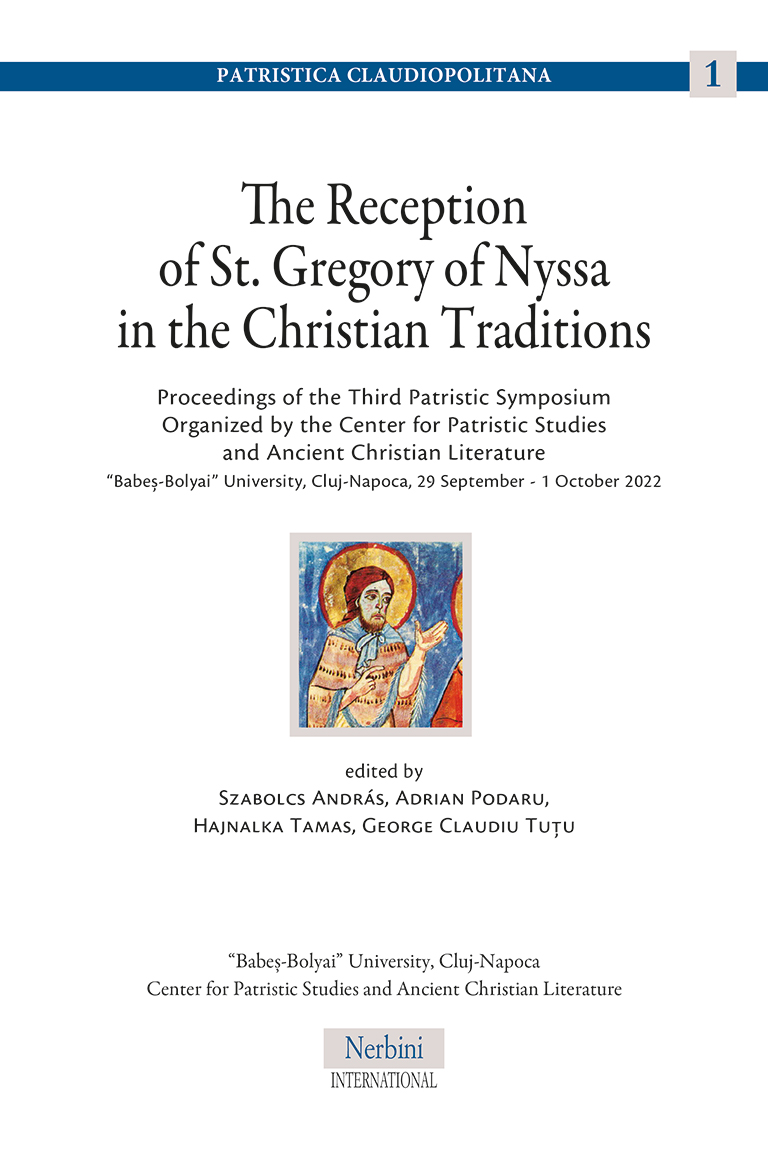
The Reception of St. Gregory of Nyssa in the Christian Traditions
Lucian Dîncă
Grégoire de Nysse: canoniste et moraliste
Abstract
Saint Gregory of Nyssa (335-395), one of the three Cappadocian Fathers, is known for his skills as a theologian, dogmatist, anti-heretical polemicist, mystical writer, but he is less known as an ecclesiastical canonist and moralist preacher. Starting from the recent publication in the collection Sources Chrétiennes, Grégoire de Nysse: Lettre canonique, Lettre sur la pythonisse et Six homélies pastorales, we will approach two lesser-known themes from the work of the Cappadocian: canonist and moralist. In the writings published in volume 588 of the French scientific collection, the Nyssen answers some brothers bishops on these topics starting from the concrete situations experienced in the communities that they shepherd. After leaving the catacombs, the Church finds itself forced to adopt a canonical code and moral norms to put into practice the teaching of Christ and to implement the Gospel values in the light of the Saviour’s Resurrection.
L. Dîncă, Grégoire de Nysse: canoniste et moraliste, in S. András – A. Podaru – H. Tamas – G.C. Tuțu (a cura di), The Reception of St. Gregory of Nyssa in the Christian Traditions. Proceedings of the Third Patristic Symposium Organized by the Center for Patristic Studies and Ancient Christian Literature (“Babeș-Bolyai” University, Cluj-Napoca, 29 September – 1 October 2022), Nerbini International, Firenze 2026, 81-98