The Reception of St. Gregory of Nyssa in the Christian Traditions
Proceedings of the Third Patristic Symposium Organized by the Center for Patristic Studies and Ancient Christian Literature (“Babeș-Bolyai” University, Cluj-Napoca, 29 September – 1 October 2022).
Edited by Szabolcs András, Adrian Podaru, Hajnalka Tamas, George Claudiu Tuțu
Contributi di Szabolcs András, Adrian Podaru, Hajnalka Tamas, George Claudiu Tuțu, Claudio Moreschini, Giulio Maspero, Cecilia Flueraș, Lucian Dîncă, Guido Innocenzo Gargano, László Perendy, Marius Portaru, Eugen Maftei
Compra su Nerbini.it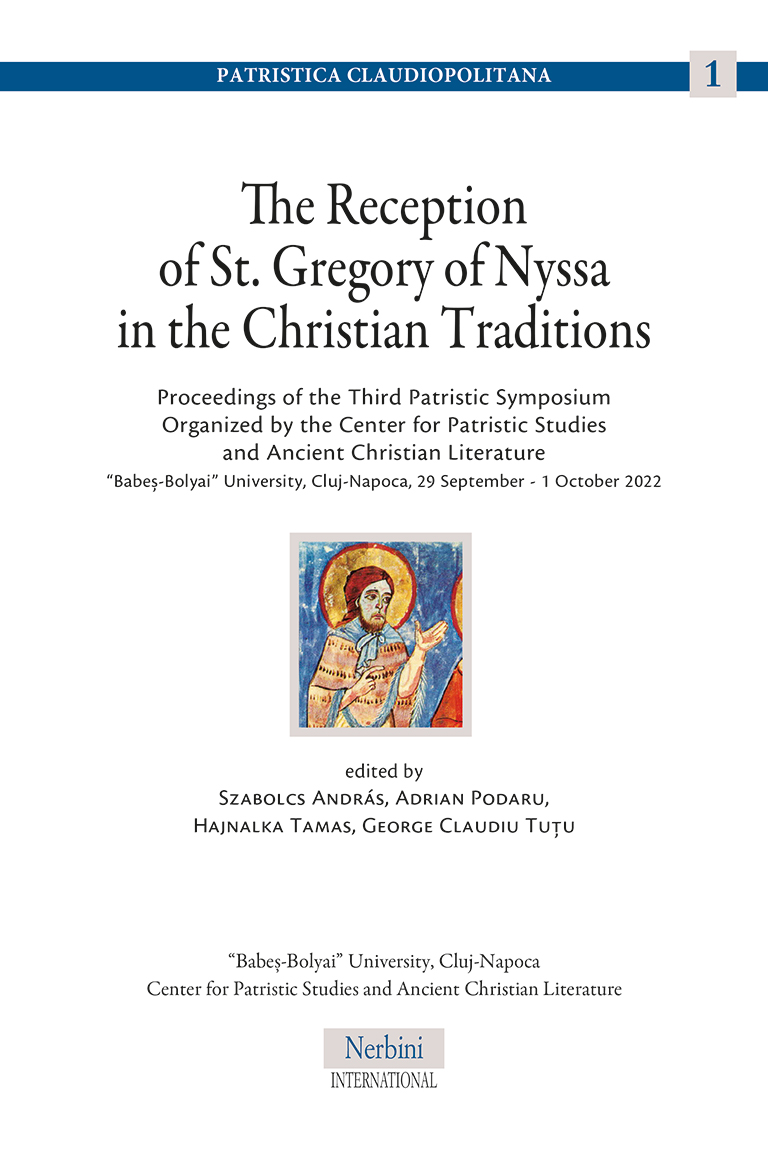
The Reception of St. Gregory of Nyssa in the Christian Traditions
Szabolcs András
The Interpretation of St. Gregory of Nyssa’s Concept of Dynamism in the Context of the Filioque Debate
Abstract
This study delves into Saint Gregory of Nyssa’s Trinitarian theology, particularly his concept of divine dynamism, to elucidate its potential to mediate perspectives in the longstanding Filioque debate. The Filioque clause, which concerns the procession of the Holy Spirit, has historically divided Eastern and Western Christianity. Gregory of Nyssa’s perspective, grounded in the theological framework established by the Cappadocian Fathers, represents a synthesis that emphasizes the unity and relational distinction within the Holy Trinity. Gregory posits that the Holy Spirit, as the divine dynamis or animating force, emanates from the Father towards the Son while remaining intrinsic unity with the divine essence. This idea underscores the distinct yet unified roles within the Trinity without suggesting a hierarchy of essence. Gregory’s nuanced view of divine relationships influenced subsequent theologians, including Gregory Palamas, who adapted the concept of divine energy to bridge the immanent and economic Trinity. This paper explores how Gregory’s views, contextualized alongside those of Maximus the Confessor, Gregory Palamas, and Augustine, might serve as a foundation for ecumenical discourse by clarifying the nature of divine processions and the scope of theological discourse. Ultimately, Gregory’s thought challenges the East-West divide by suggesting that the distinct modes of divine manifestation do not equate to separations in divine essence, thus advocating for theological approaches that balance apophatic and cataphatic elements. This interpretation of Gregory of Nyssa’s work demonstrates his relevance in contemporary ecumenical dialogue and affirms his role in the discourse surrounding the divine mystery of the Trinity.
S. András, The Interpretation of St. Gregory of Nyssa’s Concept of Dynamism in the Context of the Filioque Debate, in S. András – A. Podaru – H. Tamas – G.C. Tuțu (a cura di), The Reception of St. Gregory of Nyssa in the Christian Traditions. Proceedings of the Third Patristic Symposium Organized by the Center for Patristic Studies and Ancient Christian Literature (“Babeș-Bolyai” University, Cluj-Napoca, 29 September – 1 October 2022), Nerbini International, Firenze 2026, 159-166