The Reception of St. Gregory of Nyssa in the Christian Traditions
Proceedings of the Third Patristic Symposium Organized by the Center for Patristic Studies and Ancient Christian Literature (“Babeș-Bolyai” University, Cluj-Napoca, 29 September – 1 October 2022).
Edited by Szabolcs András, Adrian Podaru, Hajnalka Tamas, George Claudiu Tuțu
Contributi di Szabolcs András, Adrian Podaru, Hajnalka Tamas, George Claudiu Tuțu, Claudio Moreschini, Giulio Maspero, Cecilia Flueraș, Lucian Dîncă, Guido Innocenzo Gargano, László Perendy, Marius Portaru, Eugen Maftei
Compra su Nerbini.it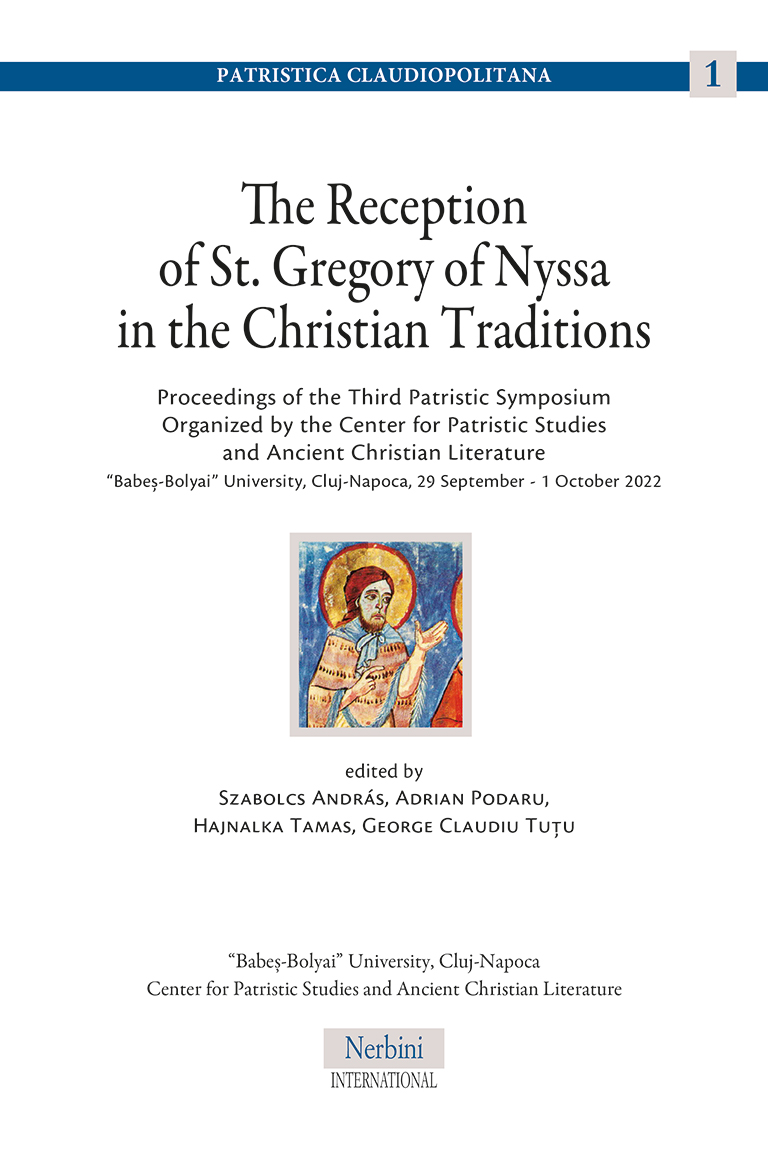
The Reception of St. Gregory of Nyssa in the Christian Traditions
Guido Innocenzo Gargano
Gregorio di Nissa e il suo influsso nel pensiero occidentale
Abstract
The legacy that Gregory of Nissa leaves to subsequent Christian generations is extremely rich, but the author interprets everything starting from the theological premises of the Contra Eunomium and reflects on the theme of the search for the face of God, highlighting that, in the text of his Life of Moses, Gregory of Nissa essentially teaches the West that the path of seeking the face of God initially has all the characteristics of a luminous knowledge (hē gnōsis phōs ginetai), referable to the so-called positive way, but always strengthened by the so-called negative way. However, he then teaches that, as one progresses on the path of knowledge, a conversion (apostrophē) becomes inevitable, allowing a passage from knowledge properly so-called (gnōsis) to the knowledge that is certified by the Word of God, which invites a true participation (metousia) in the divine nature (to tēs theias physeōs). Yet, the closer one gets to the goal, the more one realizes that this very goal reduces human presumption, faced with the impossibility of seeing (atheōrēton) God. The only remaining path, then, is to see in not seeing, contenting oneself with observing the footprints left by the Son of God on earth and faithfully following in his steps. But on tiptoe! For everything occurs through an experience of theosis or divinization, proper to one who falls face to the ground in the silence of the unspeakable contemplation of the apophatic mystery.
Furthermore, in the Homilies on the Canticle of Canticles, it is possible to discover in Gregory of Nissa the christological and ecclesiological premises of these convictions. This extraordinary openness to what in the West would come to be called the sacramental journey finds in Gregory of Nissa—who bases everything on the new creature emerging from the baptismal waters that initiate human participation (metousia) in the divine nature (theosis)—the very origins of the three stages of Christian initiation, marked by the three steps of didaskalia, manuductio, and mystagoghia, which after him would become the universally shared heritage of the great Church.
G.I. Gargano, Gregorio di Nissa e il suo influsso nel pensiero occidentale, in S. András – A. Podaru – H. Tamas – G.C. Tuțu (a cura di), The Reception of St. Gregory of Nyssa in the Christian Traditions. Proceedings of the Third Patristic Symposium Organized by the Center for Patristic Studies and Ancient Christian Literature (“Babeș-Bolyai” University, Cluj-Napoca, 29 September – 1 October 2022), Nerbini International, Firenze 2026, 101-127